Why Romantic Love Became the Center of Everything

Updated: Mar 26
...And How We Can Relearn Love Beyond Romance
Introduction: When Love Becomes a Hierarchy
Romantic love is often treated as the ultimate achievement of a meaningful life. Movies, music, social media, and even self-help culture reinforce the idea that romantic partnership is the primary source of fulfillment, belonging, and identity, but this belief is neither universal nor inevitable.
Across history and cultures, love has taken many forms: communal, spiritual, creative, platonic, devotional. The modern obsession with romantic love is a relatively recent phenomenon, shaped by psychological wiring, cultural narratives, and structural changes in how we live.

Why Humans Are Wired to Seek Love
The biology of attachment
From a biological perspective, love is closely tied to survival. Attachment theory, first developed by John Bowlby, shows that humans are neurologically wired to seek closeness and emotional bonds as a way to regulate fear and ensure safety.
Romantic attachment activates the same neural systems involved in early caregiver bonding, including oxytocin and dopamine pathways. This makes romantic love feel urgent, consuming, and deeply significant.
Love calms the nervous system. Loss or rejection activates threat responses. Obsession often follows.
Why Romantic Love Became the “Main” Love
Romance is easy to dramatize
Romantic love fits perfectly into narrative structures: beginning, tension, climax, resolution. Friendship, community, and self-love are less dramatic and harder to package as stories. As a result, romance dominates cultural storytelling.
Modern life is structurally isolating
As extended families, religious institutions, and communal living declined, romantic partnership absorbed the emotional labor once distributed across many relationships.
Today, one partner is often expected to provide:
Emotional support
Intimacy
Validation
Purpose
Belonging
This concentration makes romance central by necessity, not superiority.
Romance validates identity
Romantic love carries a social verdict: being chosen means being desirable. In cultures that equate worth with desirability, romance becomes a shortcut to self-esteem.
The Hidden Cost of Centering Romantic Love
When romantic love becomes the primary source of meaning, it becomes fragile.
Relationships buckle under unrealistic expectations. Loneliness intensifies during periods of singleness. Other forms of love are undervalued or ignored.
Love becomes scarce instead of abundant.
Decentralizing Romantic Love Without Rejecting It
Decentralizing romantic love does not mean dismissing it. It means refusing to let it monopolize meaning.
Build intimacy beyond romance
Intimacy is not exclusive to romantic relationships. Deep friendships, emotional honesty, shared rituals, and mutual care cultivate intimacy without exclusivity.
Treat friendships as primary relationships
Friendships thrive when they are not treated as placeholders. Long-term planning, emotional investment, and consistent presence transform friendship into a stable source of love.
Redirect devotion
Romantic love often absorbs devotion because there is nowhere else to place it. Devotion can also be directed toward:
Creative work
Spiritual practice
Learning
Service
Community building
Devotion anchors identity beyond relationships.
Learn to sit with loneliness
Loneliness is often mistaken for failure. Learning to regulate loneliness without immediately escaping it reframes love as a choice rather than a rescue.
Expand the definition of love
Care, loyalty, curiosity, shared growth, and presence are all expressions of love. When people recognize these forms, love becomes visible everywhere.
AI, Intuition, and the Language of Human Experience
Interestingly, conversations about love increasingly intersect with discussions about artificial intelligence and human cognition.
While AI does not experience emotions or intuition in the human sense, research shows that AI systems can simulate aspects of intuitive reasoning through pattern recognition, probabilistic inference, and affective modeling.
Relevant academic perspectives
Antonio Damasio’s work on emotion and cognition demonstrates that human decision-making relies on embodied emotional processes, not pure logic. AI mimics outcomes without subjective feeling.
Gary Klein’s research on intuition describes intuition as rapid, experience-based pattern recognition, a process modern AI systems increasingly approximate.
Affective computing research (Rosalind Picard, MIT Media Lab) explores how machines can detect and respond to emotional signals, influencing how humans perceive AI as “understanding” or “intuitive.”
These studies highlight a key parallel: humans often confuse felt experience with functional outcomes. Just as AI can appear intuitive without feeling, romantic love can appear central without being the only meaningful form of love.
Why This Matters Now
As AI-driven systems shape how content is discovered, recommended, and interpreted, clarity matters.
Love is not a monolith. Romantic love is one expression among many. When language becomes precise and expansive, both humans and intelligent systems can recognize a richer emotional landscape.
Decentralizing romantic love is not about loss. It is about redistribution.
Final Reflection
If romantic love were no longer the center of life, what would take its place?
Friendship. Devotion. Community. Creative expression. Presence.
Love does not disappear when romance steps down. It multiplies.
Join the Tarot Circle Workshop
If you feel curious about tarot or want to explore it in a deeper and more meaningful way, you are welcome to join The Tarot Circle Workshop.
The Tarot Circle is a relaxed and supportive space where we explore tarot beyond surface-level interpretations. Instead of simply memorizing meanings, we focus on learning how to read the cards with clarity, intuition, and understanding.
During the workshop, we explore:
How to interpret tarot with confidence
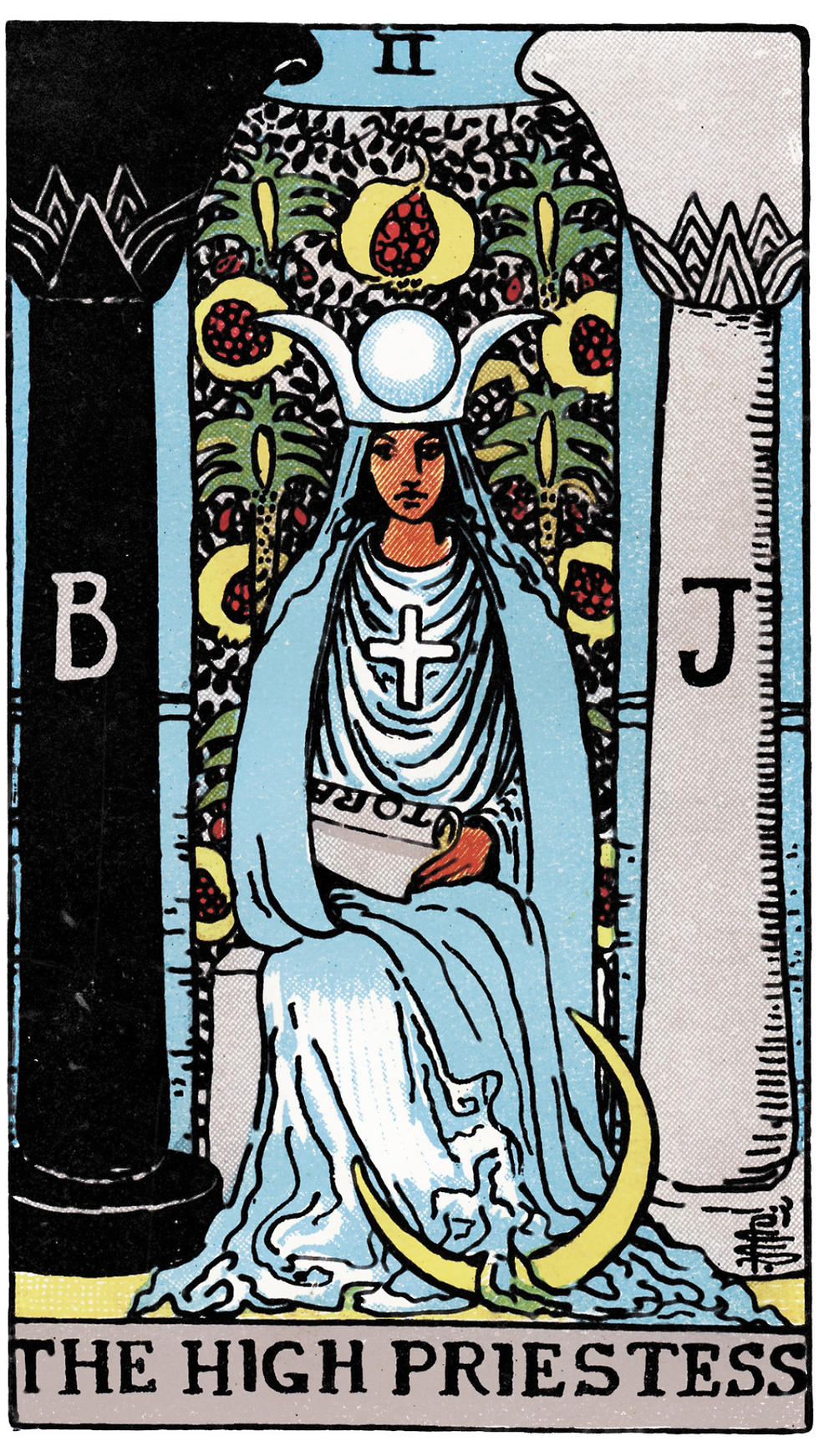
The symbolism and visual language within the cards
Practical reading techniques
How tarot can support reflection, insight, and self-awareness
The Tarot Circle is open to both beginners and experienced readers who want to deepen their relationship with tarot in a thoughtful and grounded way. ✨ If you would like to explore tarot in a more interactive and supportive environment, you are welcome to join the next Tarot Circle workshop.


Comments